What Poetry Knows
Languages of mystery, thresholds, and ongoingness

The photographer Robert Adams spoke once about an anecdote of Robert Frost when asked by a reporter what he meant by his poem replying, “You want me to say it worse?”
What Frost protects here is not obscurity, but experience itself. Analysis of poetry, prose for that matter, abounds and that commentary comforts usually in its magnetism for the known, the accepted, the familiar, ultimately, the cliché. But poetry is a feeling and a relationship, as estranged from explanation as experience itself. The question is not what it means, but what it works in us.
Louise Glück, whose poetry was accompaniment on pandemic mornings for more than three years and is now mainstay in our lives, wrote, “The poem may embody perception so luminous it seems truth, but what keeps it alive is not fixed discovery but the means to discovery.” This is part of a larger argument that art is not a service, but something of and for the spirit, ‘from which it removes the misery of inertia.’ She once described poetry as a shell placed to the ear, a single message for a single reader. The response to poetry is not commentary, but what it works in you.
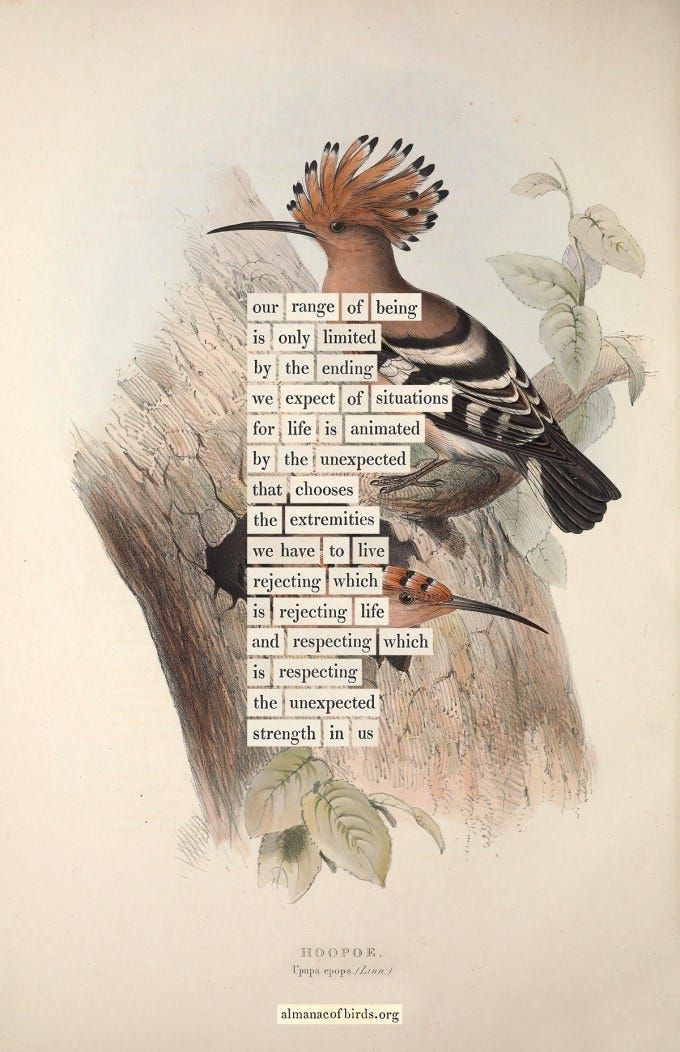
Poetry is not a way of explaining experience, but a way of remaining in relationship with it. Poetry is the language that happens as we live, as we experience and emote and breathe. This is the meaning of poetry to me: It is the discovery of and reaching for language through one’s own experiences and emotions, those things you feel most immensely inside of you and between you and the world; at once personal and relational. Indeed, poetry is an uncovering of relational space and a questioning, then, of what you have believed to the boundaries of self. “And I began to realize that the only place where things were actually real was at this frontier of what you think is you and what you think is not you” writes David Whyte. The poet’s words return to me with renewed meaning, now, here, at the beginning of this particular year and all years and perhaps all beginnings and middles and ends of any sort—sometimes I feel as if the only place true in my experience is poetry, the only place the world feels unbroken, which is to say its complexity is not belittled and banished.
Perhaps the only way to not be broken is to be unfinished.
Perhaps the only way to not be broken is to be unfinished. A life made constantly at threshold, perpetually crossing and having not crossed threshold. How could we apprehend that nonstationarity of being while living in a world that desires determinacy, decision, finality, settledness? The best poetry is a celebration of this tension and becomes a support for living at once amongst the irremediable uncertainty and the surest thing we know: our experience. If that experience is ultimately indefensible within and through the capacities of our ordinary language, poetry reaches to the growing edges of language and populates those places with new ways of putting words and ideas and silences together.
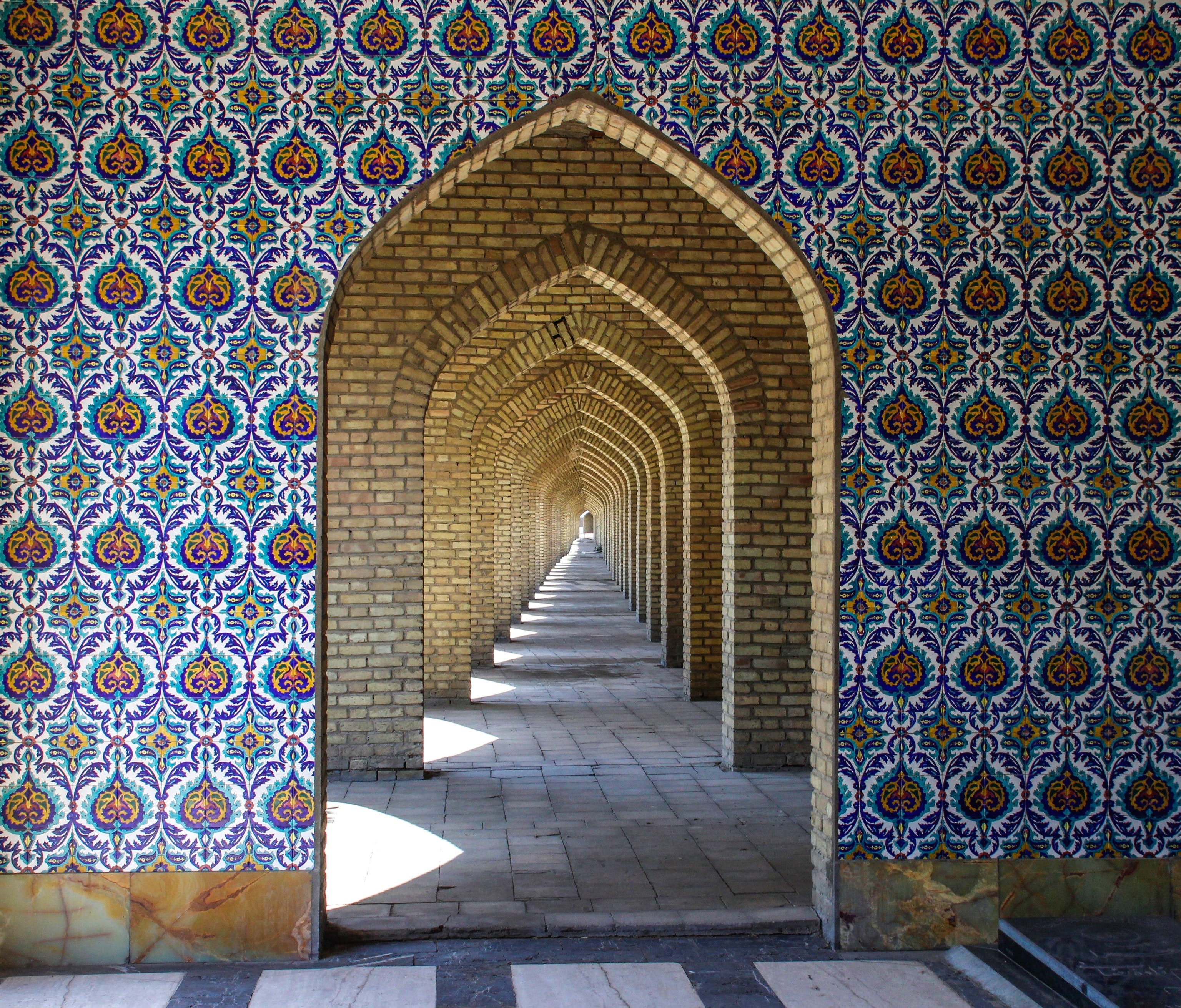
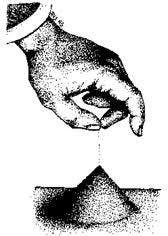
Poetry, as the best science--as all of our magnificent feats of encounter with mystery--effects a change in us. This is something of what they work in us; a changed landscape of the possible and with it our entire horizon of being. We are systems poised at critical thresholds. Like a pile of sand to which the addition of new grains causes avalanches, unpredictable in timing and size, we seem to self-tune toward disruption.
Some sort of energy must be constantly input to sustain a position at a critical point, a place from which complexity emerges. What is that energy source for ourselves? Perhaps it is mystery itself and the questions it requires. We are among an unending flow of paradox. As soon as any part of paradox is resolved new ones more immense and numerous than any previous open. But we don’t become overwhelmed, certainly don’t ‘end.’ Somehow we grow to those more immense irreconcilabilities.
That growth is what poetry is at its best, or what it works in me. We become in some new way, which is not at all to write that we become finished. Poetry silently makes this distinction, which is in fact not a distinction at all (distinction definitionally implying categories and finality and neatness), but rather a discernment (how much shifts in that simple conceptual turn!): between self-change and finishedness. The great tragedy is not that we are never finished, but that we are sold the idea that we could be and that it is desirable to be. No, change is crossing a threshold and a threshold is, according to John O’Donohue, a place where you move into more critical and challenging and worthy fullness.
A triumph of a poem is to apprehend an emergence, an unrepeatable coalescence of self, conditions, and moment. (make this a quote in the article) Emergence remains a mystery to science, uncomfortable to the mind of science that prefers to categorize, systematize, and label and unapproachable with a philosophy that believes everything is predictable if we but know a little more. Emergence situates itself upon a wave that has never occurred before and will never again. There may be a new kind science for that phenomenon. For now, that is apprehended best in the pages and ages of poetry. The best poems leave us with questions. Here I’m left with, ‘What is it to go near emergence? What is its heat?’
This ongoingness is the most clarifying understanding of flourishing that I yet have.
Hegel wrote that genuine tragedies in the world are not conflicts between right and wrong, but conflicts between two rights. So the field on which poetry is staged is tragic. Yes we change, yes we seek settledness, and yes unfinishedness is our way in life. This ongoingness is the most clarifying understanding of flourishing that I yet have. Poetry is capacious enough to hold all of that. It lays bare the way tragedy does, the way being confronted with more complexity than you theretofore acknowledged. A poem unfolds before me endlessly, undoes me endlessly if I allow it enough space, suspend my ‘self’ a breath longer. All of this happens in real-time. As Seamus Heaney writes, “Useless to think you’ll park and capture it / More thoroughly. You are […] / A hurry through which known and strange things pass.”
And we need poetry. ‘Poetry is not a luxury. It is a vital necessity of our existence,’ wrote Audre Lorde.
For a long time I have thought in poems, have thought that poetics, the unsayable said, has been alongside my scientific inquiry in apprehending more of the unknown. If poetry is a way of staying in relationship with mystery, then writing it—and sharing it—is less a choice than a responsibility.
An old and dear friend and Director of the Wick Poetry Center, David Hassler, once saged that we all need to make poetry a part of our environments. This is a small start to make it a part of the Flourishing Commons’ and perhaps a little more a part of yours. And it is with a renewed sense that my purpose with these commons, perhaps as with all commons, is to create encounters with flourishing, experiences that we can all have within us, carry with us, becoming ultimately uncontainable within us, erupting out into flourishing all around us, that I want to make poetry a part of this environment.
These are unfinished, unpolished, unsuspecting poems; expressions that other registers have been inadequate to—what Brian Eno was referring to when he wrote that the crack of a blues voice on a vinyl is an emotional event too momentous for the medium assigned to record it. Poetry, as a register, is a place to really feel the spectrum of human experiences and emotions.
In putting these posts out there, they represent a translation from my own uncertainty and questioning into a tangible vulnerability. The path of vulnerability puts you into proper relationship with the world, writes David Whyte. Sharing here in public, they are an attempt to move into that relationship.
Perhaps in them you will find something of yourself or your experience, the possibility to feel a little less alone.
You are invited to respond in whatever silent or vocal way that nourishes you.
“Collapse in the residual”
It used to be
that theory
explained.
Subtract it
from the world
and we lose
ourselves
in the residual.
No flatness
is reached
Ex--
planation
fails. Space left
impregnates
utter divergence
What of those next generations
the ones for which the incommensurability
expands and
takes agency?